
Facility managers are used to maintenance work they can see, hear, and physically touch. A leaking valve drips onto the floor. A worn bearing begins to vibrate. A loose belt squeals before it fails. In most building systems, symptoms are visible long before a failure becomes a crisis.
Electrical systems are different. And in Arizona, the operating environment adds another layer of complexity.
Unlike mechanical or plumbing systems, electricity is invisible. Problems often develop quietly, without obvious warning signs. By the time an issue becomes noticeable, the underlying condition may have existed for months or even years. Extreme temperatures, sustained cooling demands, dust, and seasonal storms can accelerate deterioration or expose weaknesses in electrical infrastructure.
That’s why commercial electrical maintenance is so diagnostic-heavy, especially for facilities in Phoenix and across Arizona, most of the work goes into finding what’s wrong before anything gets repaired.
Electrical Problems Often Develop Without Warning
Mechanical systems provide constant physical feedback. HVAC technicians can often identify a failing motor by sound alone. Plumbers can trace leaks visually. Building engineers can feel vibration, observe airflow changes, or detect overheating through touch and smell.
Electrical systems rarely offer that same visibility.
A conductor can be overloaded while appearing perfectly normal. A loose connection may generate heat inside a panel for weeks before a failure occurs. Voltage imbalance can quietly shorten motor life while equipment continues operating seemingly without issue.
Arizona’s summer temperatures, which regularly top 110°F in Phoenix, can compound these problems. Electrical equipment installed outdoors or in inadequately cooled spaces may operate under elevated ambient temperatures for extended periods. At the same time, sustained air conditioning demand can increase electrical loading across a facility.
Equipment may continue functioning normally while its operating margin gradually decreases.
As a result, electrical maintenance focuses heavily on identifying what’s becoming a problem rather than simply repairing what’s already failed. The repair itself may take relatively little time. Finding the root cause can require hours of testing, tracing, and analysis.
How Arizona’s Heat, Dust, and Monsoons Add Complexity
Arizona facilities face several environmental and operational factors that make electrical diagnostics especially important.
Heat. Phoenix summers regularly top 110°F, and electrical rooms, transformers, switchgear, and outdoor enclosures without adequate ventilation run hot for months at a time. Equipment sheds heat less effectively in high ambient temperatures, while cooling demand drives electrical loads up across the facility.
Dust. Buildup inside equipment blocks ventilation and cooling, and when contamination meets moisture, it contributes to insulation breakdown and tracking.
Monsoons. Wind-driven rain, lightning, and power disturbances create intermittent problems that are hard to reproduce once the weather clears.
Growth. Across the Phoenix metro, facilities are expanding, adding equipment, and repurposing space. Electrical systems designed for one operating profile are often supporting very different loads today.
None of this usually causes an immediate failure. It wears equipment down gradually or exposes weaknesses that only diagnostic testing will find.
The Source of an Electrical Problem Isn’t Always Obvious
Electrical failures frequently originate somewhere other than where symptoms first appear.
A motor that trips repeatedly may not have a motor problem at all. The root cause could be unstable incoming voltage, harmonic distortion, grounding deficiencies, or another issue elsewhere in the distribution system.
Modern facilities make this process even more complex.
Commercial buildings, manufacturing facilities, distribution centers, and healthcare environments increasingly rely on interconnected electrical systems, including variable frequency drives (VFDs), building automation systems (BAS), UPS equipment, networked controls, smart lighting, and sensitive electronic devices.
When systems interact, a problem in one part of the electrical infrastructure can affect equipment elsewhere in the facility.
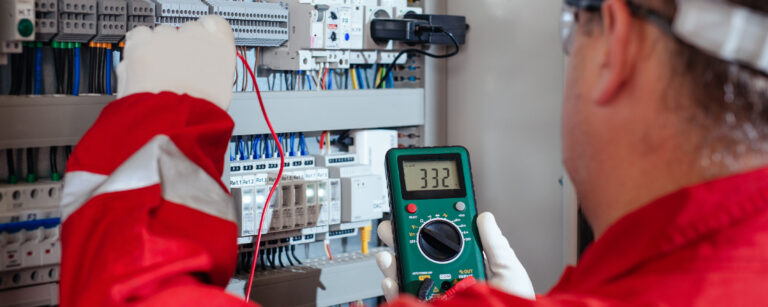
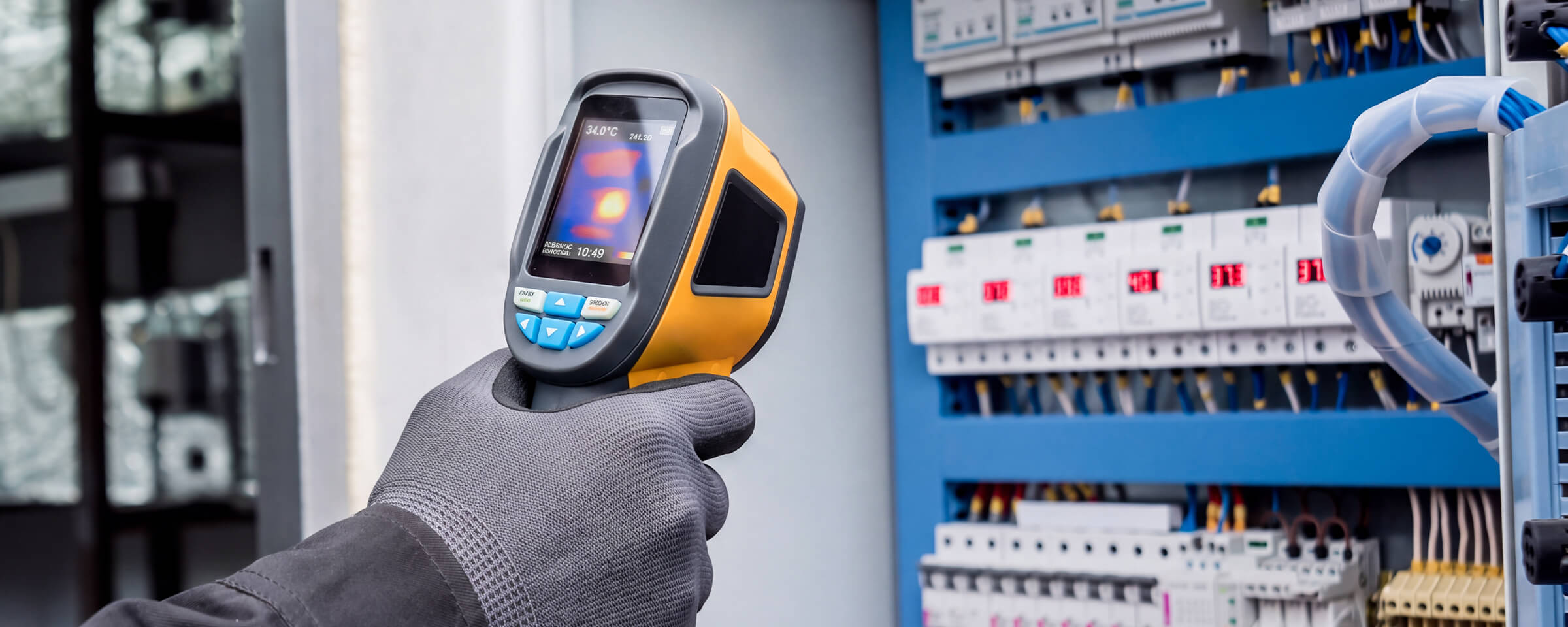
Because of that complexity, electrical troubleshooting increasingly resembles diagnostics in healthcare or IT infrastructure more than traditional mechanical repair. Technicians rely on thermal imaging (infrared thermography), power quality analyzers, insulation resistance testing, and data loggers to identify conditions that cannot be physically observed.
Safety Shapes the Diagnostic Process
Electrical troubleshooting also operates under strict safety requirements.
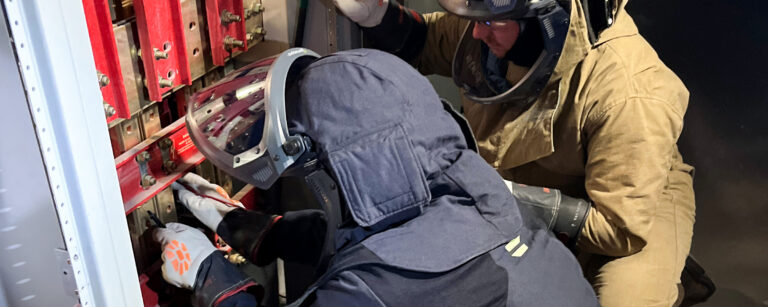
Unlike many mechanical systems, energized electrical equipment presents significant arc flash and shock hazards. Technicians must follow established electrical safety procedures, such as those outlined in NFPA 70E, including determining when equipment can be safely de-energized and when testing requires additional precautions.
Much of the diagnostic process relies on controlled measurements, testing procedures, and monitored data.
This matters even more in Arizona facilities, where shutting down critical equipment during peak summer operations can create significant operational challenges. Maintenance planning must balance equipment accessibility, safe working conditions, and the facility’s need for continuity.
Why Scheduled Electrical Maintenance Matters
Electrical failures can escalate rapidly once conditions deteriorate. Because warning signs are often hidden, facility managers need a structured approach to identifying developing issues before they become major failures.
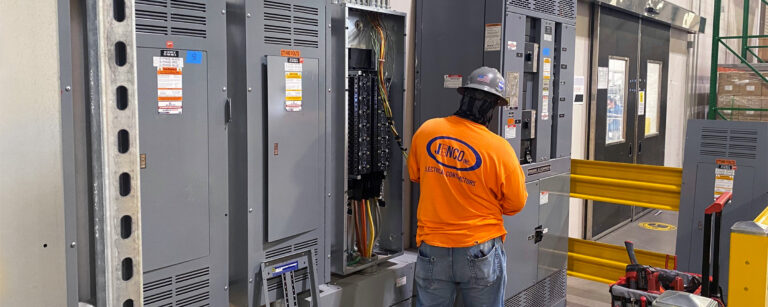
Scheduled electrical maintenance may include thermal imaging, equipment inspections, load analysis, appropriate connection inspections and torque verification, power quality testing, and review of equipment operating conditions.
It’s also increasingly a compliance question. The 2023 edition of NFPA 70B, the industry standard for electrical equipment maintenance, changed from a recommended practice to an enforceable standard. It requires a documented electrical maintenance program and calls for infrared thermography at least every 12 months.
In Arizona, timing matters as much as frequency. A practical annual calendar looks like this:
- Late spring: thermal scans under representative load, before peak cooling demand, to catch abnormal heating that won’t show up in lighter months
- Pre-monsoon (June): check enclosure seals, grounding, and surge protection
- Post-monsoon (October): inspect for moisture and storm damage, and review event logs for power disturbances
- Year-round: load trend reviews, connection inspections and torque verification, power quality testing, and documentation updates
Intermittent problems add another layer of difficulty. Facility managers often hear complaints such as “the breaker only trips occasionally” or “the lights flicker once in a while.” These issues can disappear before technicians arrive, making historical trending, event monitoring, and longer-term data collection especially valuable.
Over time, scheduled maintenance builds a baseline, so changes stand out and get addressed before they interrupt operations.
Electrical Maintenance Is More Analytical Than Many Facility Managers Realize
Electrical maintenance can appear slower or more diagnostic-intensive than other building trades because much of the work happens before tools ever touch the equipment.
Technicians gather information, verify conditions, analyze electrical loads, and eliminate potential causes to ensure the underlying problem is addressed safely and correctly.
This also explains why accurate as-built drawings, updated single-line diagrams, equipment inventories, and historical maintenance records are so valuable. Good documentation can dramatically reduce troubleshooting time, especially in facilities that have undergone expansions, equipment replacements, or changes in electrical demand.
For Arizona facility managers, an annual electrical maintenance plan provides a structured way to evaluate equipment condition, identify changes in operating demands, and prioritize corrective work.
Ironically, the best electrical maintenance is often invisible. When systems are properly maintained, equipment continues operating reliably, temperatures remain within acceptable limits, downtime is avoided, and occupants never notice the work taking place behind the scenes.
That reliability is not accidental. It’s the result of a maintenance discipline built around diagnostics, analysis, and scheduled investigation, supported by an understanding of the environment in which the facility operates.
If your facility hasn’t had a thermal scan or electrical assessment in the past year, schedule one before summer peak loads arrive. Jenco’s team can help you build an annual electrical maintenance plan for your Phoenix-area facility.