Every commercial and industrial facility depends on a reliable electrical system. It keeps production moving, supports life-safety systems, protects data, powers critical equipment and allows the organization to operate without interruption.
Yet electrical infrastructure often receives little attention until something goes wrong.
Why Electrical Equipment Fails Without Visible Warning
Most electrical equipment works quietly in the background. Switchgear, transformers, panelboards, motor control centers and distribution equipment can perform for years without drawing attention. When conditions begin to change, there may be no visible sign.
Electrical equipment rarely fails without warning. More often, it fails without visible warning.
Loose connections, changing loads, corrosion, worn contacts and deteriorating components can all create additional resistance. That resistance produces heat, often well before a breaker trips, a connection burns or equipment stops working.
Left unaddressed, the condition can accelerate damage and lead to an outage that appears sudden, even though the problem had been developing for months.
What Is an Electrical IR Scan?
The challenge is that most of these components are enclosed inside energized equipment, where a routine visual inspection reveals very little.
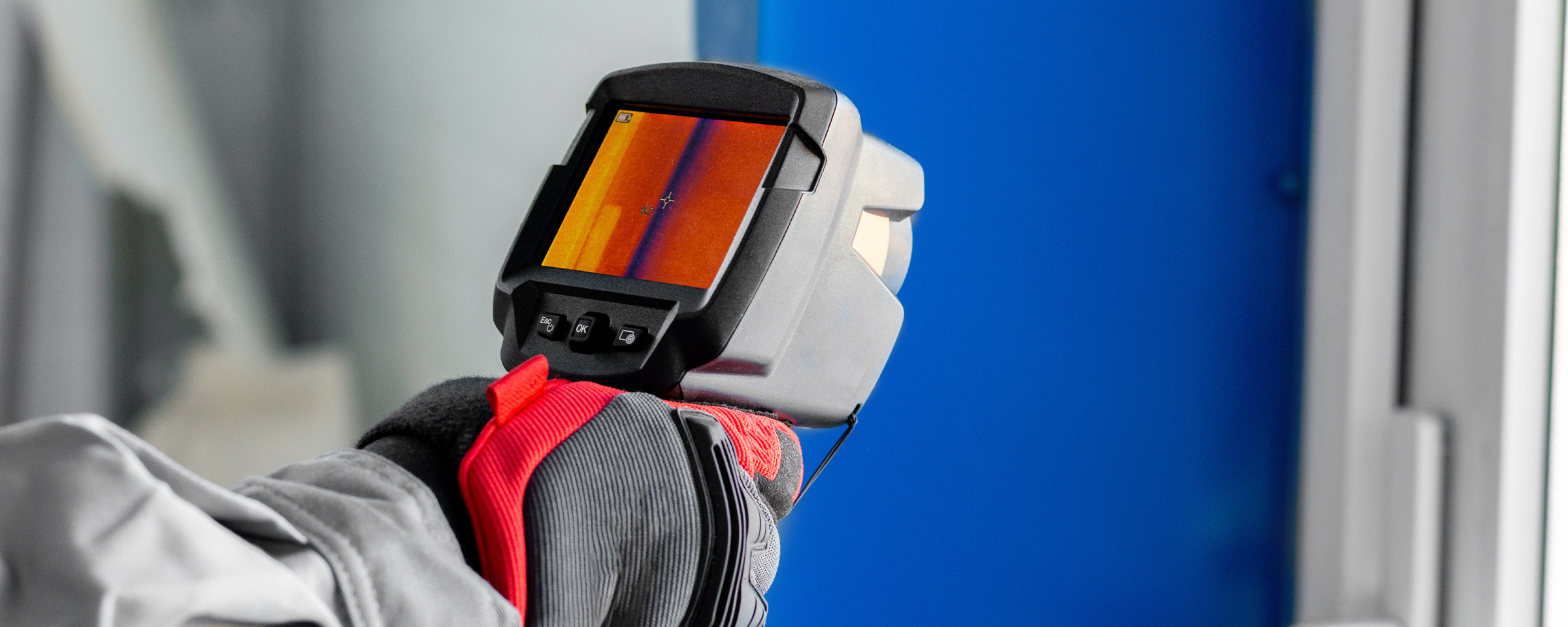
An electrical infrared inspection (commonly called an IR scan) gives facility teams a way to see how the system is performing while it is operating.
How Thermal Imaging Works on Energized Electrical Equipment
Using a thermal imaging camera, a qualified electrician can identify temperature differences across energized electrical components. Those differences don’t provide a diagnosis on their own, but they show where closer investigation is needed.
Because the equipment remains in service during the scan, the inspection offers a real-world view of the system under normal load without requiring unnecessary shutdowns or dismantling.
Which Facilities Benefit Most from Electrical Infrared Inspections
Scanning under load is especially valuable where downtime is difficult to schedule and even harder to absorb:
- Advanced manufacturing and semiconductor facilities
- Data centers
- Hospitals and surgical centers
- Public-safety buildings
- Distribution and logistics centers
What an Electrical IR Scan Can and Can’t Tell You
One of the most common misconceptions is that the camera provides an automatic answer. It doesn’t.
A thermal image shows temperature differences. It doesn’t explain why they exist.
Consider two similar breakers in the same panel serving comparable loads. If one is noticeably warmer, that may indicate a problem, or it may reflect a legitimate difference in loading or operating conditions.
Questions a Qualified Electrician Asks During an IR Scan
An experienced electrician looks beyond the image and asks:
- Has the electrical load changed?
- Was maintenance or other work performed recently?
- Is the breaker operating near its design capacity?
- Is the heat concentrated at a connection, or spread across the device?
- Has the temperature changed since the last inspection?
- Do comparable components show the same pattern?
The value of an IR scan is not the thermal photograph itself. It’s the ability to interpret the pattern in the context of the electrical system and turn that information into a practical next step.
The camera records temperature differences. The electrician determines whether those differences matter.
What Electricians Look For During an Infrared Electrical Inspection
An IR scan isn’t simply a search for warm equipment. Electricians are looking for equipment operating differently from comparable components or differently from the way it operated in the past.
They consider loading, ambient conditions, equipment type, recent changes and the location of the heat pattern before drawing conclusions.
Connection and Load Problems Found by Thermal Imaging
Most findings trace back to one of three conditions, all of which show up as heat before they show up as a failure.
- Loose connections. Vibration, corrosion, thermal expansion and normal aging can weaken contact between conductors and terminals. Even a small increase in resistance can create heat and accelerate deterioration.
- Overloaded circuits. As facilities add production equipment, servers, HVAC capacity, EV charging or other loads, circuits and distribution equipment may begin operating closer to their limits. Thermal imaging can show where additional evaluation is needed.
- Phase imbalance. In a three-phase system, one phase running consistently warmer than the others may point to uneven loading, a connection issue or a change in equipment condition.
Electrical Equipment Assessed During an IR Scan
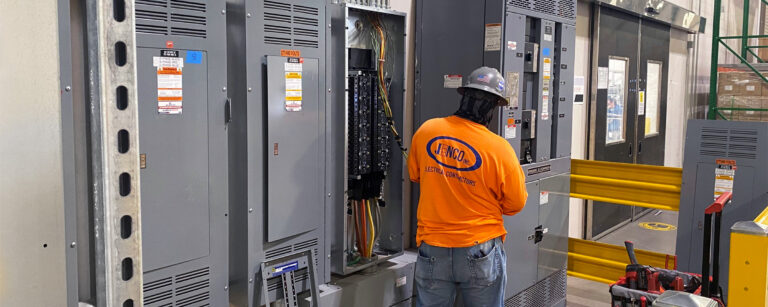
A single scan covers the full distribution chain, from the service entrance down to the equipment on the floor.
Breakers and protective devices
Internal contacts wear and mechanical components age. A breaker running hotter than comparable devices under similar load deserves attention, even though temperature alone does not prove it has failed.
Switchgear and distribution equipment
Bus connections, cable terminations and breaker compartments are difficult to assess visually while energized. An IR scan supports repair planning, maintenance scheduling and capital budgeting.
Motor control centers
MCCs contain numerous breakers, contactors and connections supporting production equipment, pumps, conveyors and HVAC systems. A scan can help isolate developing issues before they become operational disruptions.
Transformers
Changing thermal patterns may reflect loading, cooling, connection or equipment-condition concerns. Findings need to be considered alongside the transformer’s operating history and current demand.
Emergency power equipment
Automatic transfer switches, generators and critical distribution assets may spend much of their time waiting for an outage. When they are carrying load, thermal imaging helps verify that key connections and components are behaving as expected.
What Happens After an Electrical IR Scan
A useful IR inspection ends with a clear, prioritized report and not a folder of thermal images.
Each finding should identify:
- The equipment involved
- The observed temperature pattern
- The operating conditions at the time of the scan
- The recommended next action
How IR Scan Findings Are Prioritized
Not every finding requires an immediate shutdown or major repair. Many can be addressed through a planned service visit, a targeted adjustment, load verification, torque check or closer monitoring.
Higher-priority conditions can be scheduled for correction under controlled circumstances, with the right parts, people and outage window in place.
What the Process Looks Like for Your Facility Team
The process is straightforward:
- The scan is performed while the equipment is operating
- The results are reviewed with an electrician
- The work is prioritized based on risk and operational impact
Instead of launching a broad maintenance effort, the facility can focus on the items that actually need attention.
Why Annual Electrical IR Scans Matter
Facilities don’t stand still. Loads shift, spaces are renovated, equipment is added, operating schedules change and electrical assets continue to age.
None of those changes automatically creates a problem. Together, they alter the conditions under which the system operates.
Building an Electrical Maintenance Baseline Over Time
A single scan offers a snapshot. Repeated scans create a baseline.
That baseline makes it easier to distinguish a stable condition from a developing one, and to prioritize maintenance based on evidence rather than assumption.
The objective isn’t to add another maintenance task, it’s to make the rest of the electrical maintenance program more focused.
Electrical IR Scans in Arizona: Heat, Dust and Growing Loads
Arizona places sustained demands on electrical infrastructure.
How Arizona’s Climate Stresses Electrical Equipment
- Long cooling seasons keep HVAC and distribution loads elevated for months at a time
- Outdoor equipment is exposed to prolonged heat and ultraviolet radiation
- Dust accumulates in electrical rooms and enclosures
New Electrical Loads in Growing Arizona Facilities
Facilities across the state are expanding and changing quickly. Semiconductor and advanced manufacturing plants, healthcare campuses, distribution centers and data centers all depend on substantial electrical capacity.
Solar generation, battery storage, EV charging and microgrid technologies are also becoming more common, adding new operating conditions to systems that may not have been designed for them originally.
Annual IR scans give facility managers a way to evaluate how those systems are performing under actual conditions, rather than relying on design assumptions or waiting for a failure to reveal a problem.
How IR Scans Fit into Electrical Maintenance Standards
Electrical maintenance programs increasingly emphasize understanding equipment condition while systems remain in operation.
NFPA 70B: The Standard for Electrical Equipment Maintenance
NFPA 70B reflects that shift by treating condition assessment and documented maintenance as part of a broader electrical reliability program. IR scans are one useful tool within that approach.
NFPA 70E: Safe Work Practices for Energized Electrical Equipment
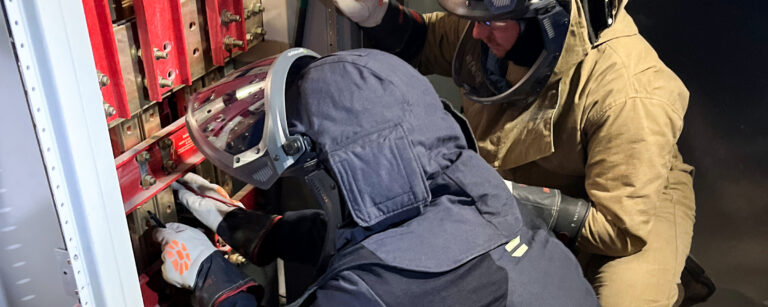
NFPA 70E addresses safe work practices for employees working on or near energized electrical equipment. Any inspection requiring access to energized gear should be performed by qualified personnel using appropriate procedures and personal protective equipment.
OSHA Requirements for Electrical Hazards
OSHA doesn’t specifically require an annual infrared inspection. It does require employers to address recognized workplace hazards.
A documented inspection and maintenance program helps an organization demonstrate that it is managing electrical risk in a disciplined way.
How to Choose an Electrical IR Scan Provider
Thermal cameras are more accessible than they once were. Owning a camera isn’t the same as understanding an electrical system.
The camera records temperature differences. The electrician determines whether those differences matter and what should happen next.
Questions to Ask Before Hiring an Infrared Inspection Provider
- Who will perform the scan?
- Who will interpret the results?
- Does that person understand commercial and industrial electrical distribution?
- Are they comfortable evaluating switchgear, transformers, panelboards, motor control centers, transfer switches and protective devices under load?
What a Good Electrical IR Scan Report Should Include
The final report should be usable. It should:
- Separate routine observations from conditions that need attention
- Explain the basis for each recommendation
- Give the facility team a practical path forward
Thermal photographs may support the report. They should never be the report.
Schedule an Electrical IR Scan for Your Facility
A well-executed IR scan is a relatively unobtrusive way to learn more about an electrical system while it’s doing its job.
The real value comes from combining that information with experienced electrical judgment — and using it to make better decisions before an operating concern becomes an emergency.
Find it on a thermal image, not on an incident report.
Contact Jenco to schedule an electrical IR scan.